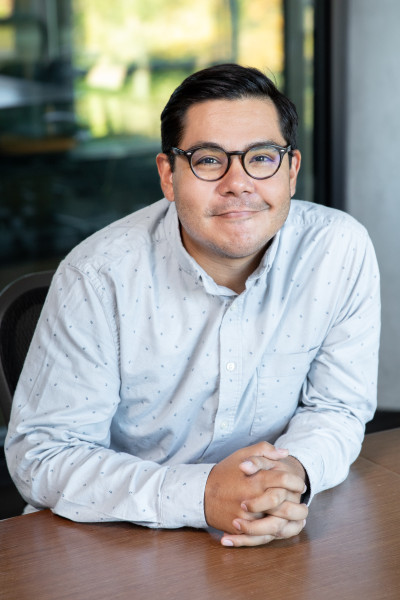
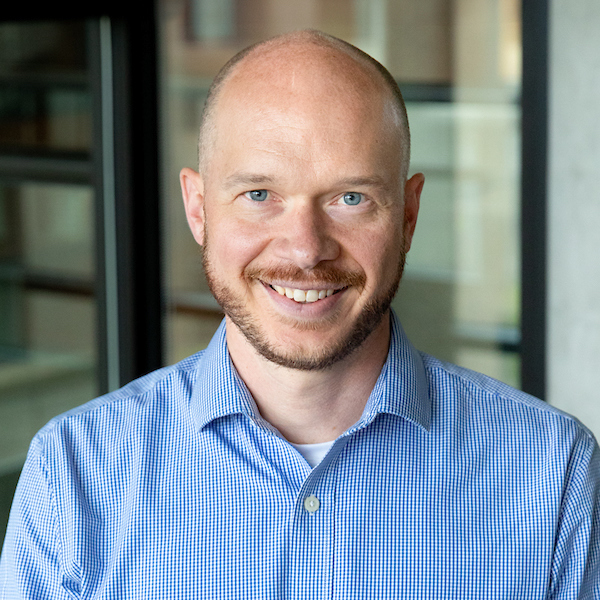
2026 Arboretum Research Fellows, left to right: Hannah Ashe, Wyatt Cummings, Jasmine Groves, Jillian Neece, Shaneya Miriyagalla (Photo: Maddie Smith)
The UW Arboretum has announced the recipients of the 2026 Arboretum Research Fellowships. These graduate fellowships support early career scientists doing work that aligns with our mission and advances a long tradition of research in restoration ecology and conservation. The Arboretum also fosters connections among the Fellows and with the broader community.
A two-year Leopold Research Fellowship was awarded to Wyatt Cummings. Research Fellowships for one year of support were awarded to Hannah Ashe, Jasmine Groves, Shaneya Miriyagalla, and Jillian Neece. Read on to learn more about the Fellows and their research.
Heart regeneration research in nonhuman primates: A model for ventricular pressure overload
Congenital heart defects are the most common type of birth defect in the United States and can result in heart failure early in life. Stem cell grafts offer potential as a treatment for cardiac defects, but both laboratory bench experiments and whole–animal studies are necessary for progress in this area. By testing cardiac treatments in real-life situations, researchers can observe how the heart adapts to ongoing changes during exertion, such as beating more rapidly when an animal is running or climbing.
ORIP’s National Primate Research Centers (NPRCs) are facilitating studies on this topic by providing expertise and resources for laboratory research, as well as new nonhuman primate (NHP) models for studying heart function in vivo.
Stem cells and regenerative medicine—the process of creating living, functional tissues to repair or replace damaged cells, tissues, or organs to treat or cure conditions caused by aging, disease, or congenital defects—are a key focus of ORIP’s research investments.
A team of researchers has reported that heart muscle cells grown from human induced pluripotent stem cells can integrate into the hearts of rhesus macaques (Macaca mulatta) with a state of ventricular pressure overload, similar to what people with heart defects experience. This team is led by Dr. Marina Emborg, professor, Medical Physics, and Director, Preclinical Parkinson’s Research Program, Wisconsin NPRC, UW–Madison; Dr. Jodi Scholz, assistant professor, Comparative Medicine, Mayo Clinic; and Dr. Timothy Nelson, associate professor, Pharmacology, Medicine, and Director, Todd and Karen Wanek Family Program for Hypoplastic Left Heart Syndrome, Mayo Clinic
Recent work by Great Lakes Bioenergy Research Center scientists
Using published peptide sequences from other species, scientists identified sorghum genes that may encode peptides and used phylogenetics and transcriptomics to analyze evolutionary relationships and expression patterns across tissue types and developmental stages. Results are published in Plant Direct.
Researchers constructed a compendium of more than 1,000 sorghum transcriptome profiles from 15 genotypes grown in a wide range of environments and treatments. Data from ~1,000 additional RNA-seq profiles will be added following a short embargo to ensure quality control. This study describes compendium content and how the compendium has been used to identify sorghum genes/pathways that modulate sorghum growth, development, and resilience. Artificial intelligence and machine-learning-aided analysis of compendium data can guide gene regulatory network analyses, gene editing, and pathway/trait engineering.
CNH donation brings clean-energy tractor technology to UW–Madison students and researchers
A new methane-powered tractor from CNH is giving UW–Madison students and researchers hands-on access to clean-energy equipment with applications in agriculture, alternative energy, and sustainable operations.
The New Holland tractor, valued at nearly $300,000, arrived at UW–Madison on April 9, 2026. The donation supports educational programming across the College of Agricultural and Life Sciences (CALS) and the College of Engineering, including CALS’ Agricultural Research Station Network.
New molecular therapy restores vision in model of inherited childhood blindness — and may open the door to treatment for dozens of rare diseases
A UW–Madison research team has shown that an engineered molecule can override a genetic error that causes a rare but devastating form of inherited childhood blindness, restoring the missing protein and recovering visual function in patient-derived cells and in a mouse model of the disease.
The work, just accepted for publication in Signal Transduction and Targeted Therapy — one of the world’s highest-impact biomedical journals — represents a significant step toward a potential treatment for Leber congenital amaurosis type 16 (LCA16), a condition for which no approved therapy currently exists.
The study centers on a molecular strategy called ACE-tRNA therapy — a way of correcting a protein-building error at the cellular level without altering a patient’s DNA. The senior author is Bikash Pattnaik, PhD, professor in the UW–Madison School of Medicine and Public Health Department of Pediatrics, with a joint appointment in the Department of Ophthalmology and Visual Sciences. He is also Clinical Director of Visual Electrophysiology at UW Health, and holder of the Retina Research Foundation Daniel M. Albert Chair at the McPherson Eye Research Institute.
Bridge funding helps UW–Madison advance statewide special education efforts
By Karen Rivedal, Office of Research & Scholarship Communications
A timely infusion of bridge funding enabled UW–Madison program evaluators over the past year to sustain and expand crucial work supporting induction and mentoring programs for the state’s special education workforce.
The replacement money, triggered by the loss of a federal grant, totaled $60,000 in matching funds from the School of Education and university research dollars. It paid for six months of work by the Wisconsin Evaluation Collaborative (WEC) — based in the school’s Wisconsin Center for Education Research — to finish a key part of an evaluation plan aimed at strengthening statewide programs from the Wisconsin Department of Public Instruction (DPI) to help retain early-career special education teachers and directors in school districts.
New UW–Madison study reframes community college student mental health as a driver of purpose and career development
By Katie Grant, Office of Research & Scholarship Communications
A newly published study by UW–Madison School of Education researchers based at the Wisconsin Center for Education Research (WCER) finds that community college students’ experiences with mental health challenges can shape not only the obstacles they face but also their sense of purpose, empathy, and career direction.
According to the study, many students are working to imagine meaningful futures while carrying significant emotional strain. Participants described tensions among their ambitions, well-being and confidence in their ability to achieve career goals. At the same time, the research finds that these lived experiences can foster a deeper sense of empathy and a desire to pursue careers that make a positive impact on others and their communities.
UW–Madison researchers receive Spencer Foundation grant to advance education for children and youth on the move
By Katie Grant, Office of Research & Scholarship Communications
The Multilingual Learning Research Center (MLRC) at the Wisconsin Center for Education Research (WCER), University of Wisconsin–Madison, in partnership with the Educational Research and Action Platform (Plataforma de Investigación y Acción Educativa S.A. — PIASE), has been awarded a one-year Vision Grant from the Spencer Foundation to plan a major initiative aimed at improving education for children and youth on the move across Central America and Mexico.
The project, “Education on the Move for Children and Youth on the Move,” seeks to reimagine how education systems can better serve young people experiencing migration, displacement and transnational movement. The work will center on the perspectives and desires of these migrant community members. The planning effort will lay the foundation for a collaborative, multi-phase research and action initiative designed to expand access to equitable, high-quality and inclusive learning opportunities.
Led by principal investigators Caroline E. Parker (MLRC, UW–Madison), Maria Josefina Vijil (PIASE) and Sonia Morin (PIASE), the project brings together a cross-regional coalition of researchers, practitioners, policymakers and community leaders to co-design a more responsive and connected educational system
New UW–Madison, MMSD journal article finds preschoolers already form friendships based on shared characteristics
By Katie Grant, Office of Research & Scholarship Communications
New research, published in a peer-reviewed journal by researchers from the University of Wisconsin–Madison and the Madison Metropolitan School District (MMSD), shows that children as young as 4 years old begin forming social networks shaped by shared characteristics, offering new insight into how early peer relationships develop.
The study, published in Early Childhood Research Quarterly, examines how preschool students choose their playmates and whether those choices reflect “homophily” — the tendency to associate with others who are similar. Using data from nearly 400 children in MMSD’s 4-year-old kindergarten (4K) program, researchers found that even at this early age, children show clear patterns in their playmate choices.
UW–Madison’s Saldaña wins grant to reimagine how schools coordinate resources
By Karen Rivedal, Office of Research & Scholarship Communications
Christopher Saldaña is working to create a new national model for how resources serving students are delivered.
UW–Madison Assistant Professor of Education Finance and Leadership Christopher Saldaña is part of a team that has been awarded a $75,000 Vision Grant from the Spencer Foundation to develop a major research initiative focused on improving how K–12 schools, districts, and community organizations coordinate resources to support students. Saldaña will co-lead the planning project alongside Louis Gomez, distinguished professor at the University of California, Los Angeles (UCLA), and Tammie Causey-Konaté, educational research consultant and CEO of ImpactEd Enterprises.
Although work on the 12-month planning grant will begin in Wisconsin, the team aims to create a scalable national model for resource coordination that can be adapted by school systems across the country.
Community wisdom is transforming wellbeing initiatives and research
Aaron Hicks didn’t have it in his plan to build and advise research at the Center for Healthy Minds (CHM). Dekila Chungyalpa didn’t know she’d lay the groundwork to create a documentary film for and by Indigenous people. And, Dan Grupe and Christy Wilson-Mendenhall didn’t realize they’d regularly participate in mindfulness groups that help sustain community research projects with justice-impacted people. Yet, all of these things are central to the rigor, reach and impact of their work at CHM.
When Wisconsin community members, like Hicks, and academic partners, like Chungyalpa, Grupe and Wilson-Mendhall, collaborate as equal partners, they find paths to build programs and do research together that’s aimed at promoting wellbeing and flourishing.
Chin publishes in JAMA — Beyond Binary—The Case for Amyloid Centiloid Quantification
In patients with mild cognitive impairment or dementia, amyloid positron emission tomography (PET) can estimate cerebral amyloid burden, inform etiologic diagnosis, and help determine eligibility for amyloid-targeting therapies.
Despite recent US Food and Drug Administration (FDA) clearance of software that quantifies amyloid PET on the Centiloid scale, a numeric estimate of global cortical amyloid plaque burden, results are typically communicated as a binary positive or negative. The researchers propose clinical use of amyloid quantification with Centiloid (CL) values.
Study team presents findings on Filipino American politics and wellbeing at Asian American Studies Conference
The Usap Tayo research team and community partners presented their findings on Filipino American politics, wellbeing and community-engaged research in April at the 2026 Association for Asian American Studies Conference in Hawaii.
Tony DelaRosa, the Center for Healthy Minds collaborator and a lead researcher on the study, presented the team’s findings at two roundtables attended by graduate students, community members and experts on Critical Filipinx Studies methodologies.
UW–Madison study finds a workout before therapy boosts client–therapist relationship, client initiative
By Laurel White
Hitting the treadmill before sitting down with your therapist may help make your therapy session more effective, according to a new National Institutes of Health (NIH)-funded study from UW–Madison researchers.
The study, published in the Journal of Affective Disorders, found 30 minutes of moderate exercise before a session of cognitive behavioral therapy was associated with stronger therapist-client connection (therapeutic alliance) and greater client initiative (behavioral activation).
Meyer
Jacob Meyer, an assistant professor in the School of Education’s Department of Kinesiology, led the pilot study. He says the research aims to identify additional ways to support treatment of major depressive disorder (MDD) — a condition that is known to be difficult to treat.