
Research News Roundup for August 2026
Found: Mega-Earth! Researchers with the Wisconsin Center for Origins Research have discovered their first exoplanet, a 170-million-year-old planet more than 2.5 times larger than the Earth.
It’s nearly 170 million years old. It’s more than 2.5 times the size of Earth. And it’s the first exoplanet discovered and catalogued by researchers with the Wisconsin Center for Origins Research (WiCOR).
Max Kroft, a graduate student in the lab of Assistant Professor of Astronomy Thomas Beatty, is the lead author on a paper that characterizes GJ 523b, a dense exoplanet that’s classified as a “Mega-Earth” due to its massive size. The paper is currently under review and will be available through the open-access archive arXiv.
Undergraduate Researcher Explores How Viruses and Their Parasites Evolve Together

Shiv Muthupandiyan
Viruses have parasites of their own, and those tiny hitchhikers may help determine how viruses change, survive and respond to treatment. Undergraduate researcher Shiv Muthupandiyan of the John Yin Lab at the Wisconsin Institute for Discovery is the lead author of a new study examining how defective interfering particles, or DIPs, evolve alongside viruses and shape their behavior.
DIPs are mutant viral particles that act like parasites of viruses, using their resources to reproduce while slowing the virus’s growth. DIPs can arise during a typical viral infection. Because DIPs cannot replicate on their own, they rely on the virus’s replication machinery to reproduce. In doing so, they consume resources within an infected cell, thereby interfering with viral replication. This could make them useful in developing new antiviral therapies.
New AI tool enhances cell segmentation with gene expression data
By Charlene N. Rivera-Bonet, Waisman Science Writer
At a Glance:
- SegJointGene is a new AI software developed by the lab of Daifeng Wang, PhD, that improves cell segmentation by integrating spatial information with gene expression data.
- A unique aspect of SegJointGene is that it can output which genes are most informative for the spatial organization and segmentation of the cells.
- The new AI software outperforms current cell segmentation tools.
Understanding what a cell does starts with knowing exactly where it is. Now, a new AI-powered tool developed by researchers at the Waisman Center, University of Wisconsin-Madison, is making that task easier by combining tissue images with molecular activity data to more accurately map cell boundaries, potentially unlocking new insights into how cells work in health and disease.
Are solid-state batteries safer? UW-Madison engineers put them to the test
By Adam Malecek
A new study by University of Wisconsin-Madison engineers shows solid-state batteries can offer real safety advantages over lithium-ion batteries but can still catch fire and burn in a worst-case accident scenario.
“Our research shows that the scientific community shouldn’t take for granted that safety isn’t an issue for solid-state batteries,” says Eric Kazyak, an assistant professor of mechanical engineering at UW-Madison who led the study. “As these next-generation batteries start making their way into commercial products, real thought needs to be given to making them as safe as possible.”
There’s significant commercial interest in solid-state batteries because their high energy density could enable electric vehicles with much longer driving ranges.
New UW–Madison Study Finds College Affordability Policies Can Have Unintended Consequences
By Katie Grant, Office of Research & Scholarship Communications
As concerns about rising college costs continue to drive higher education policy discussions, a new study by University of Wisconsin–Madison School of Education researcher Taylor Odle suggests that policies designed to limit tuition increases may not always achieve their intended results.
In a newly published article in The Review of Higher Education, Odle and co-author Salome Otero examine how public colleges and universities responded to Tennessee’s tuition regulation policy, which established binding ranges that limited how much institutions could increase tuition and fees each year.
Using causal research methods, the article “Institutional Responses to Tuition Controls: Evidence from Tennessee’s Tuition Ranges” explores how institutions adapted to the policy and finds that responses varied across sectors.
Educators Weigh Promise, Risks of AI Scoring Tools for Writing by Multilingual Learners
By Karen Rivedal, Office of Research & Scholarship Communications

WIDA’s assessments are used to identify students who need English language support ant to monitor their progress.
A new study led by UW–Madison education researchers offers one of the first detailed assessments of how K–12 teachers view the potential use of automated scoring and feedback of writing assignments by young multilingual learners.
The study, published in Assessing Writing, “Educator perspectives on automated writing scoring and feedback for young language learners: Applying a fairness and justice lens,” reports mixed reactions from teachers regarding the benefits, risks and fairness implications of AI‑powered writing tools. Even as educators expressed trust in automation’s consistency and recognized that it could be faster than human scoring, they questioned its ability to appreciate the nuances of writing by multilingual learners, among other perceived issues.
The study was led by researchers at WIDA, a research and research services organization for multilingual learners in the UW–Madison School of Education. WIDA supports state education agencies across the country with English language development standards and English language proficiency assessments of multilingual learners.
New lab advance supercharges biotherapeutic development
Biotherapeutics, the fastest-growing segment of the pharmaceutical industry, could see another jolt of energy from a Wisconsin lab advance that accelerates a key drug development step by 100-fold.
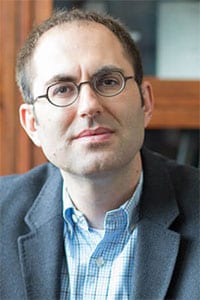
Joshua Coon, metabolism investigator at the Morgridge Institute for Research and UW–Madison professor of biomolecular chemistry, developed a way to remove liquid chromatography (LC) from the peptide mapping process. Peptide mapping is an essential test all drug companies use to determine a candidate drug’s stability, but it is notoriously time-consuming.
The Coon Lab’s technique has led to a new spinoff company called CeleramAb, which is marketing reagent and software kits that plug into existing workflows. While the chemistry removes the physical bottleneck, CeleramAb’s proprietary high-throughput enterprise software is the engine that allows pharma teams to instantly analyze the massive influx of data. The company has exclusively licensed the relevant Coon Lab IP from the Wisconsin Alumni Research Foundation (WARF).
Coon is leading the spinoff along with UW–Madison chemistry professor Lloyd Smith, who co-founded one of Madison’s most successful biotech companies, Third Wave Technologies.
UW–Madison’s López Joins William T. Grant Scholars Selection Committee
UW–Madison’s Francesca López, the Jim and Georgia Thompson Distinguished Professor in the School of Education’s Department of Educational Policy and Leadership Analysis, has been selected to serve on the William T. Grant Scholars Selection Committee.
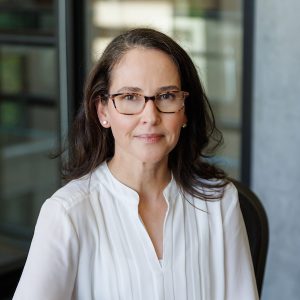
Launched in 1982, the William T. Grant Scholars Program supports the professional development of promising early-career researchers in the social, behavioral, and health sciences. The Selection Committee, composed of accomplished senior scientists in their respective fields, is responsible for evaluating applicants and selecting new committee members.
UW–Madison’s Pol earns international early career scholar recognition
UW–Madison’s Mariah Pol, a teaching faculty member in the School of Education’s Department of Curriculum and Instruction, has received the James E. Davis Early Career Scholar Award from the Social Science Education Consortium (SSEC). The award was presented during the organization’s 2026 Annual Conference in San Juan, Puerto Rico.

As part of the honor, Pol presented her research, “Moving Beyond Silos: U.S. Teachers Learning Through Historical Sites and Community Dialogues in Northern Ireland,” during the conference’s Early Career Scholars session. This work explores how immersive international professional learning experiences can support teachers’ understandings of peace education.
Pol’s research will also be published as a chapter in the conference’s annual edited volume, “From Isolation to Integration: The Connective Power of Education.”
UW–Madison’s Mariah Pol, a teaching faculty member in the School of Education’s Department of Curriculum and Instruction, has received the James E. Davis Early Career Scholar https://education.wisc.edu/wp-content/uploads/sites/15/2026/07/Mariah-Pol-Square.jpgAward from the Social Science Education Consortium (SSEC). The award was presented during the organization’s 2026 Annual Conference in San Juan, Puerto
As part of the honor, Pol presented her research, “Moving Beyond Silos: U.S. Teachers Learning Through Historical Sites and Community Dialogues in Northern Ireland,” during the conference’s Early Career Scholars session. This work explores how immersive international professional learning experiences can support teachers’ understandings of peace education.
Pol’s research will also be published as a chapter in the conference’s annual edited volume, “From Isolation to Integration: The Connective Power of Education.”
New UW–Madison study reframes community college student mental health as a driver of purpose and career development
By WCER Communications
A newly published study by UW–Madison School of Education researchers based at the Wisconsin Center for Education Research (WCER) finds that community college students’ experiences with mental health challenges can shape not only the obstacles they face but also their sense of purpose, empathy, and career direction.
The mixed-methods study, published in The Journal of Higher Education and led by Xueli Wang and a team of collaborators, examines how mental health intersects with career development among community college students. Drawing on interviews, focus groups and survey data, the study explores how students navigate academic and career aspirations while managing stress, burnout and unmet support needs.
UW–Madison’s CIMER Earns International Award for Advancing Mentoring Excellence
By Katie Grant, Office of Research & Scholarship Communications
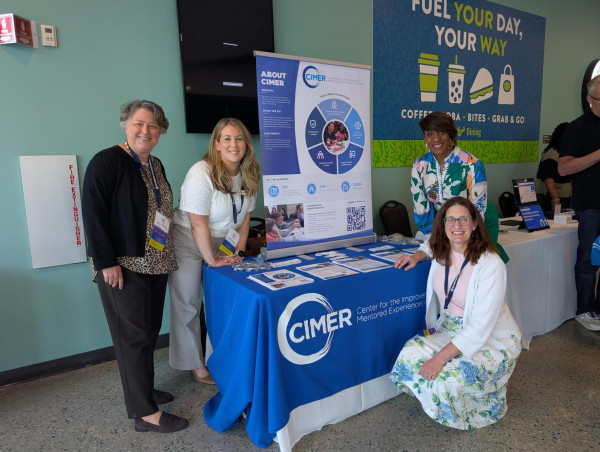
CIMER is a trusted leader in mentor-mentee relationships, higher education, and workforce development.
The Center for the Improvement of Mentored Experiences in Research (CIMER), a center within the Wisconsin Center for Education Research (WCER) at the University of Wisconsin–Madison’s School of Education, has received the 2026 Margo Murray Award for Excellent Results in Mentoring at the Societal Level from the International Mentoring Association.
The award recognizes an established mentoring program or organization that demonstrates measurable positive societal impact through mentoring best practices.