June campus research news
Posted June 3, 2026
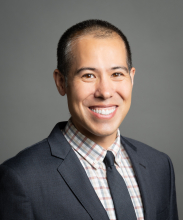 Chin Publishes Book on Alzheimer’s Disease and Dementia – Includes Personal Stories
Dr. Nathaniel Chin, the medical director for both the Wisconsin ADRC and Wisconsin Registry for Alzheimer’s Prevention (WRAP), has published a book titled When Memory Fades: What to Expect at Every Stage, from Early Signs to Full Support for Alzheimer’s and Dementia.
The book addresses common questions across the course of Alzheimer’s disease and dementia while reflecting the broader work of the Wisconsin ADRC and WRAP study and Dr. Chin’s personal story as a caregiver for his father, serving as a compassionate guide for those navigating the dementia journey.
Recently, Dr. Art Walaszek guest hosted the Dementia Matters podcast to talk about the book with Chin. Listen to the podcast here.
New Aging Research Community Map
Announcing a new UW−Madison
Aging Research community map to encourage visibility and collaboration among campus researchers who are studying aging. Anyone at UW–Madison interested in aging or lifespan-related research is invited to add themselves to the map, whether they are a seasoned researcher or at the beginning of their career.
The map was developed by the Institute on Aging and the Wisconsin Nathan Shock Center in partnership with the Data Science Institute. It is a new tool to help seed discussion and encourage collaboration. It is a visual representation of the extensive research being conducted on aging at the University of Wisconsin–Madison!
Zika infections can cause significant developmental problems
By Jenn Bal
Even babies born without the virus’s notable physical symptoms may experience sensory, attachment and anxiety issues, according to a new study.
Infants exposed to the Zika virus during pregnancy may face hidden developmental challenges, even if they appear healthy at birth. A recent study at the University of Wisconsin–Madison highlights the need for better developmental screening during a child’s first year of life.
Zika virus is known to cause severe birth defects — such as brain damage and microcephaly, a much smaller head and brain. However, little is understood about why 30% of babies born without physical symptoms go on to experience developmental problems including vision and hearing loss.
$2 Million Grant Secures Strong Foundation for UW’s Osher Center
The grant will support three associate director roles to help coordinate research, education, and clinical innovation.
Current Osher Center initiatives include working with community health workers at the Allied Wellness Center to reimagine the Department of Veterans Affairs Whole Health peer support group model to make it relevant to the Allied community, as well as partnering with the Center for Black Excellence and Culture to study the effects of African dance on the health of pregnant women. The Osher Center has also piloted Spanish-language mindfulness programming and provides integrative health consultation services at Access Wingra Community Health Center.
Clinically, the Osher Center continues to expand group medical visits and integrative approaches for conditions such as chronic pain and tobacco abuse, as well as to strengthen partnerships and offerings with other departments, including gastroenterology and oncology. Educationally, it plays a national leadership role in setting standards for integrative health education, with a focus on diversity, equity, and respectful engagement with culturally rooted practices.
That leadership extends through the Osher Collaborative, which connects 1o Osher Centers in the United States along with one in Sweden.
Read the full story.
Detailed molecular picture of tooth enamel reveals adaptions to diets, Gilbert and colleagues find
From chewing to chomping to grinding, teeth suffer from a lifetime of repeated mechanical stress. It makes sense, then, that enamel is one of the hardest natural materials. University of Wisconsin–Madison physics professor Pupa Gilbert and colleagues previously showed that the hydroxyapatite nanocrystals that make up enamel are arranged perfectly parallel to one another, like hairs in a ponytail, but their crystal lattices are not co-oriented — a structure that contributes to the biomaterial’s resistance to fracture, also known as toughness.
In a new study published on June 3 in the journal Nature, Gilbert and her colleagues developed a technique to quantitively measure enamel nanocrystal orientation angles across human and non-human primate enamel from different epochs, finding a strong correlation between how tough food is and the misorientation angle. The results help explain enamel evolution and have implications for modulating strength in bioinspired materials.
Read the full story.
A quest to understand materials that manipulate light has guided Rose Cersonsky’s career. It remains a beacon for her future.
When Rose Cersonsky, the Conway Assistant Professor in chemical and biological engineering at the University of Wisconsin-Madison, was a graduate student at the University of Michigan, she had a “Eureka!” moment that would define the next decade of her research.
She was studying the design of 3D photonic nanocrystals, tiny structures that manipulate visible light. These crystals selectively let some wavelengths through while blocking or limiting others in a phenomenon known as a photonic band gap. The structures are what give chameleons their otherworldly color-shifting abilities and morpho butterflies their vibrant, iridescent blue hues.
They are also important in industry and are used, for example, to sort different petrochemicals, and play a role in optical communications and computing, lasers and LEDs, and biological sensing.
If researchers could better understand and then design various types of 3D nanocrystals on demand, their knowledge could advance all these applications and improve quantum computing and sensing, heat management and solar power and enable new types of energy harvesting and non-degrading color.
That’s why, during her PhD, Cersonsky focused on self-assembly of colloidal diamond.
Read the full story.
UW–Madison Study Shows Training in Culturally Aware Mentoring Creates Lasting Change for Biomedical Faculty
By Karen Rivedal
A new paper co-authored by UW–Madison professor Angela Byars‑Winston demonstrates that biomedical faculty can make meaningful and lasting improvements in their mentoring practices when they participate in culturally responsive training that builds their confidence and skills to engage with students across different racial and ethnic identities.
Published in Scientific Reports, a Nature portfolio journal, the paper, “Culturally Aware Mentoring Interventions Create Enduring Changes Among Graduate Biomedical Faculty,” reports findings of a study supported by the National Institutes of Health and based in the School of Education’s Wisconsin Center for Education Research (WCER). The study offers strong evidence that faculty can learn to navigate racial dynamics in the research training of emerging scientists, with structured, guided learning experiences especially effective.
Read the full story here.
UW–Madison Project Joins With MMSD to Meet Pressing Student Needs
By Karen Rivedal
Based in the School of Education’s Wisconsin Center for Education Research (WCER), MEP is organized as a research-practice partnership meant to engage in high-quality, locally based and nationally relevant research projects on topics of mutual interest. MEP unites researchers from UW–Madison with educational practitioners from the district to inform policy, build capacity and strengthen education for Madison’s K–12 public school students.
“We wanted to have a partnership that benefited both sides,” said Beth Vaade, the senior executive director of research, assessment and improvement for the district, during a recent celebration event at Gordon Commons. The event, attended by about 70 people, featured a panel discussion, presentations and small-group talks designed to review the last decade’s accomplishments, share current work and plan for the future.
School of Education Dean Marcelle Haddix stressed the reciprocal importance of research‑practice partnerships. She noted that MEP’s work grounds research in the lived experiences of students and families while helping educators reflect critically on their work.
“Research and practice don’t just go hand in hand,” said Haddix. “They need one another to be successful.”
MMSD Superintendent Joe Gothard highlighted the value of the partnership from the district’s perspective. He said evidence-based research strengthens policy recommendations, providing information the district can use that is “accurate,” “tells a story,” and “forces change.”
The event showcased five areas where MEP’s work has been influential over the past decade.
Read the full story.
Study identifies enzymes that could improve isobutanol production in Saccharomyces cerevisiae
Isobutanol is a fusel alcohol with advantages over ethanol as a biofuel or platform for sustainable aviation fuel. Results were published in the journal Biotechnology and Bioengineering.
Read the full story here.
